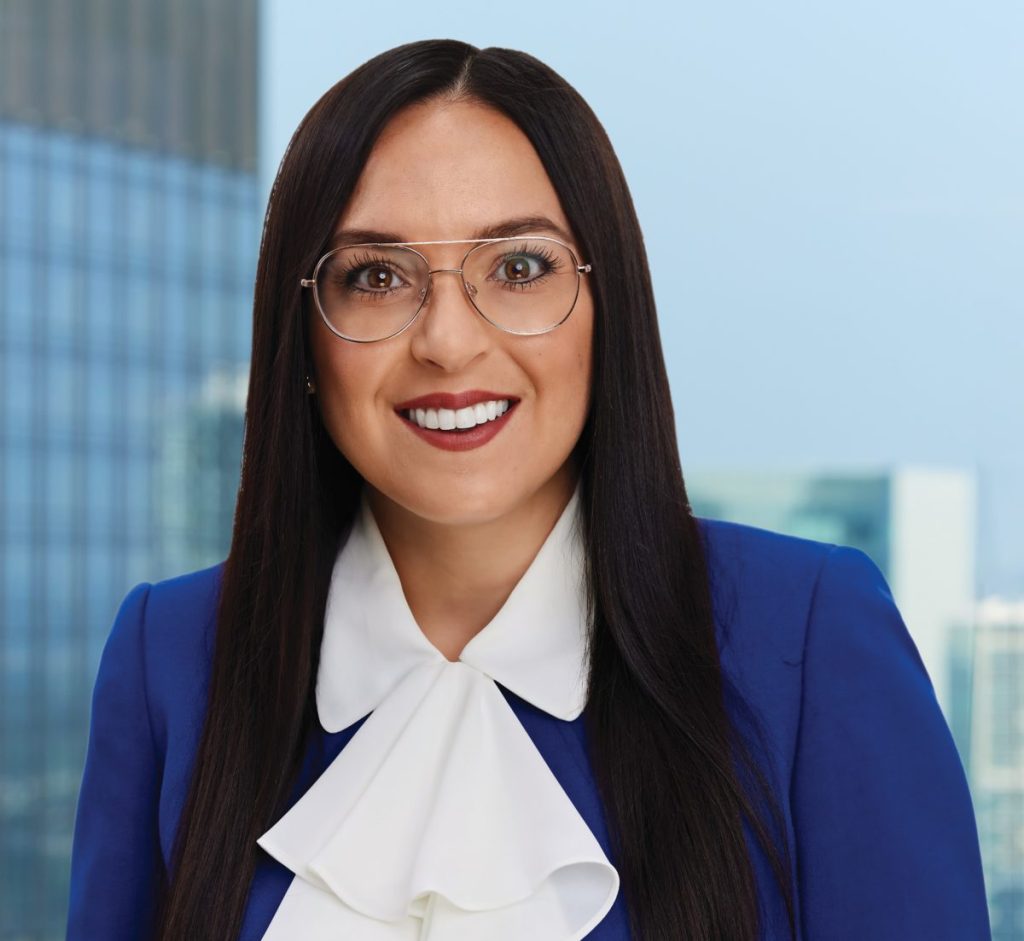
This post was contributed by Ms. Daniela Peinado Welsh of Graves Dougherty Hearon & Moody, PC in Austin, Texas. More information about Ms. Peinado Welsh can be found at the end of the post.
Dear Colleagues,
A new court is open for business in Texas, and it has adopted local rules of practice and procedure. For those who haven’t delved into the Local Rules of the Business Court of Texas, available here, below please find some practical highlights from the jam-packed, five-page rules:
Introductory Principles
- Rules supplement the Texas Rules of Civil Procedure (“TRCP”) and are effective through February 28, 2025, unless revised earlier (BCLR 1).
- Citations must follow the format “BCLR [Number]” – yes, this is specified (BCLR 1).
- Judges may exchange benches and sit or act for each other in any matter (BCLR 2).
- Parties must file a Business Court Case Information Sheet to open case (BCLR 3).
Jurisdiction & Consolidation
- You may recall the possibility that a party who removes a case to Business Court (“BC”) could nevertheless decline to consent to the Court’s supplemental jurisdiction over non-BC claims under the BC statute (Gov’t Code Ch. 25A) as worded.
- But under the local rules, a party is “deemed to agree to this Court’s supplemental jurisdiction” over any claim (BCLR 2). Note there is a stated procedure for objections.
- This local rule counts on the Business Court being a state court. Subject matter jurisdiction generally cannot be waived in the federal-court context, where (in light of federalism principles) the court is not one of general jurisdiction.
- Unrelatedly, any motions to consolidate should be filed in the first-filed case.
Automatic Disclosures
- Parties must confer on and jointly file a proposed scheduling order using the Court’s form within 30 days from the first appearance of any defendant or of the transfer/ removal (BCLR 4).
- The joint proposed scheduling order must be accompanied by each party’s corporate-disclosure statement, identifying all persons and legal entities financially interested in the outcome of the litigation (BCLR 4).
- A removing party must apprise the Business Court of any existing court settings in its notice of removal under TRCP 355, as any court settings will be vitiated upon removal . Removal does not alter deadlines under the TRCP or an existing scheduling order, until a new order is entered (BCLR 8).
Filing Requirements/ Preferences (BCLR 5)
- File proposed orders as separate instruments.
- Label unopposed motions as “unopposed” in the caption.
- Confer and certify to such for all non-dispositive motions.
- Combine brief and attachments into one bookmarked, continuously numbered PDF. Include a table of contents. Identify whether oral argument is requested.
- Use pincites for all legal authority as well as for evidentiary support, such as page-line designations (BCLR 5(c)).
Emergency Relief (BCLR 7)
- Must notify the Clerk of the Court before or upon filing of application for TRO.
- Must include a certificate of service or request for ex parte relief with your application.
- Must give opposing party at least two-hour notice, absent detailed grounds supporting your request for ex parte relief.
Discovery Protocol
- Try to resolve or narrow the dispute with opposing counsel.
- If you cannot, write a 700-word letter summarizing the dispute and containing a certification explaining your “diligent,” “personal” meet-and-confer attempts.
- Responses must not exceed 300 words, and replies are not permitted absent leave of Court.
- The Court may then schedule a telephone conference and may determine no additional briefing is necessary.
- If briefing is permitted, discovery motions and responses must not exceed 3,000 words (typically 12, double-spaced pages). Replies are limited to 1,250 words (about four pages).
Other Things to Remember
- Notify court of settlements right away (BCLR 6).
- Vacation letters may reserve up to 4 weeks per year (BCLR 9(b)).
- These rules apply uniformly across all Business Court divisions, but each judge may have their own local-local rules.
Interestingly, “[u]se of artificial intelligence is not prohibited,” but we are of course independently responsible for accuracy and compliance (BCLR 9(c)) (citing TRCP 13, Remedies Code Ch. 9– 10).
May your motions be brief and your conferences meaningful.
Thank you,
Daniela Peinado Welsh
Graves Dougherty Hearon & Moody, PC
Daniela is a first-chair litigator and trial lawyer who is passionate about serving clients’ short- and long-term needs. She represents families and businesses in complex cases ranging from $20K to $20M at issue. She is licensed to practice in Texas, California, and D.C.
Daniela looks for cost-effective ways to resolve issues, but welcomes a trial, having taken cases to verdict in federal court, state court, and arbitration. She handles all phases of a civil suit – from pre-suit investigations, injunctions, demand letters, pleadings, lis pendens notices, motions, hearings, depositions, discovery, mediation, settlements, trials, to class action and multidistrict litigation. She also manages post-judgment and appellate litigation.
Before joining the full-service litigation team at GDHM, Daniela had several formative experiences. She worked for household names at a global law firm. She received a world‑class legal education during federal clerkships. And she studied at Notre Dame Law School, where she was one of ten students invited to join both the Law Review and Moot Court Board. She was also Co-President of the Hispanic Law Students Association.
Daniela credits her resolve to being a woman of faith and descendant of Bolivian immigrants. She and her husband met over a decade ago on a fateful bus ride from Barcelona to Madrid. They are the parents of two spunky girls.
 Strictly Business
Leave a comment